
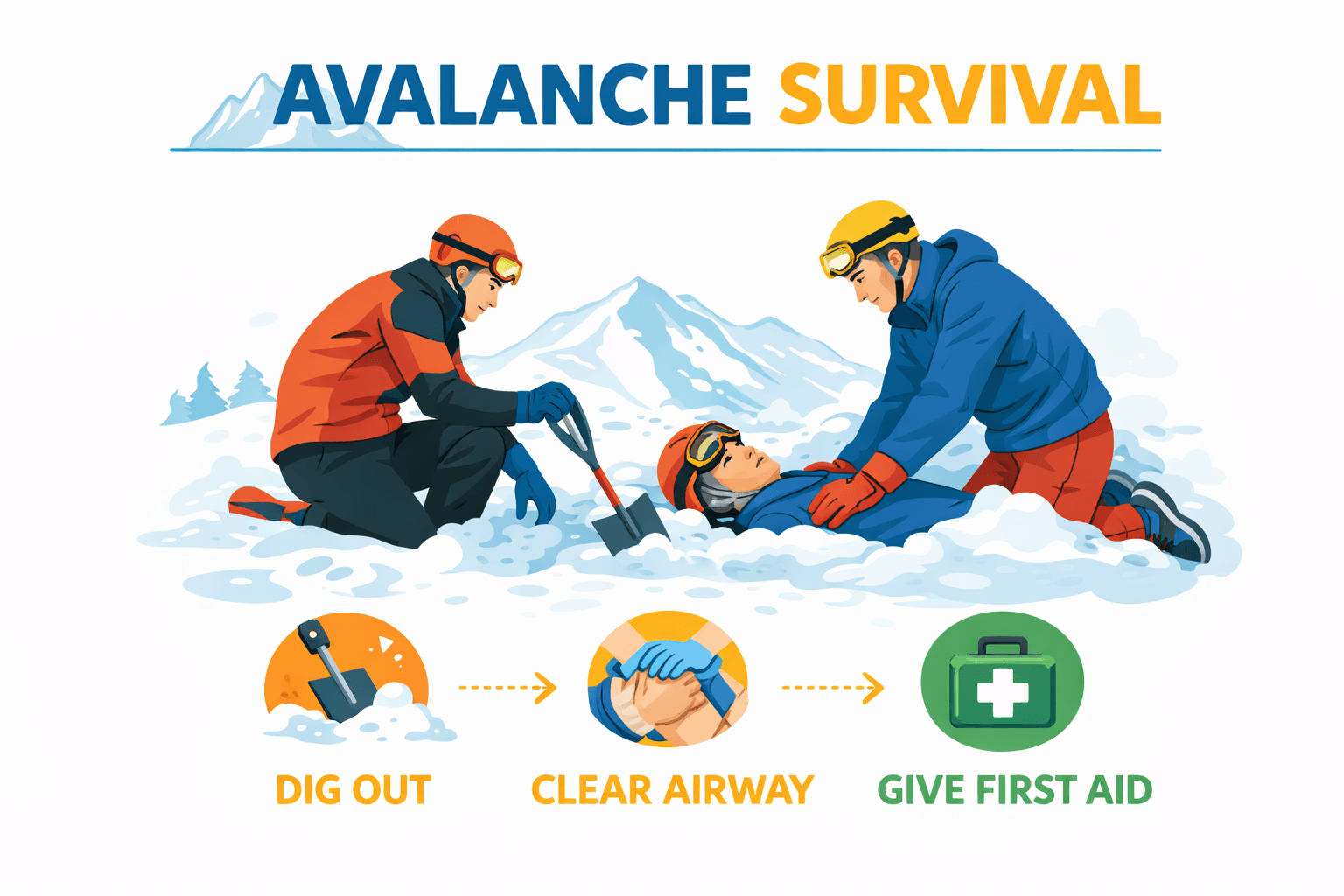
 Avalanches are powerful movements of snow that can occur on steep mountain slopes, especially after storms or when warming temperatures affect snow stability. When someone becomes buried under snow during an avalanche, immediate rescue and first aid can be critical.
In British Columbia, including areas near Vancouver such as Whistler and the Pemberton Icecap, backcountry skiing and snowboarding attract outdoor enthusiasts and professional athletes alike. Because these environments can be remote, wilderness safety training and first aid awareness are strongly recommended for anyone travelling in backcountry terrain.
Knowing how to respond quickly to an avalanche burial can make a significant difference in emergency outcomes.
Backcountry Snow Safety in British Columbia
Backcountry recreation requires careful preparation. Unlike managed ski resorts, remote mountain terrain may not have immediate access to ski patrol or emergency services.
Outdoor safety programs often recommend that backcountry travellers carry appropriate safety equipment and training, including:
-
Avalanche safety awareness
-
Companion rescue skills
-
Communication equipment
Prepared groups are often better equipped to respond quickly if an avalanche or other mountain emergency occurs.
A Backcountry Avalanche Near Whistler
Professional snowboarder Brock Crouch experienced a close call during a backcountry filming trip near Whistler, British Columbia.
Crouch, who was 18 years old at the time, was filming in the Pemberton Icecap area with a team that included snowboarders and safety staff. The group had been riding the same slope earlier that day following recent snowfall.
According to mountain safety coordinator Shin Campos, the weather had recently warmed after a storm that left approximately 10 to 30 centimetres of fresh snow on the mountain.
During one of the runs, Crouch and another snowboarder moved slightly off their intended route and approached a cornice—an overhanging mass of hardened snow often found along ridgelines.
Campos reported hearing a sharp cracking sound followed by a deep rumble as part of the cornice broke away and triggered an avalanche.
Crouch was caught in the slide and buried under the snow.
Rapid Rescue and First Aid Response
Members of the team immediately began searching for Crouch after the avalanche stopped.
When they reached the burial area, rescuers initially spotted one of his boots sticking out from the snow. They began digging carefully but quickly to reach him.
When they uncovered his head, they cleared his airway to help him breathe.
Crouch had been buried for approximately five minutes. He appeared blue in the face but was still conscious.
Rescuers continued digging until they fully freed him from the snow. Because of the potential for injuries, they also provided first aid care by stabilizing his neck and back while removing his backpack and assessing his condition.
The quick rescue and immediate first aid response helped stabilize the situation before further medical care could be arranged.
Recognizing Avalanche Risk Factors
Avalanches may occur when unstable layers of snow shift on steep slopes. Risk factors can include:
-
Recent snowfall
-
Rapid temperature changes
-
Wind-loaded slopes
-
Overhanging snow formations such as cornices
-
Steep backcountry terrain
Understanding these factors can help backcountry travellers make safer decisions during winter recreation.
Why First Aid Is Important in Remote Environments
In remote mountain areas, emergency medical teams may take longer to reach the scene. Because of this, companions often play an important role in providing early assistance.
First aid measures in wilderness settings may include:
-
Clearing the airway after burial in snow
-
Assessing breathing and responsiveness
-
Stabilizing the head, neck, and spine if injuries are suspected
-
Keeping the injured person calm and warm while waiting for rescue
Training in wilderness first aid can help outdoor enthusiasts understand how to respond safely during remote emergencies.
Prevention and Backcountry Preparedness
Avalanche safety experts often recommend several precautions for those travelling in backcountry terrain:
-
Checking avalanche forecasts before heading out
-
Travelling with experienced companions
-
Avoiding unstable slopes and cornices
-
Carrying avalanche safety equipment
-
Learning wilderness first aid and rescue techniques
Preparedness and awareness can help reduce risks in remote mountain environments.
Frequently Asked Questions
What is an avalanche?
An avalanche is a sudden movement of snow down a mountain slope. It can occur when snow layers become unstable due to weather conditions or terrain features.
What is a cornice?
A cornice is an overhanging mass of hardened snow that forms along mountain ridges. Cornices can break unexpectedly and trigger avalanches.
Why is quick rescue important in avalanche incidents?
When someone is buried in snow, their breathing may be restricted. Rapid rescue helps restore airflow and reduces the risk of oxygen deprivation.
What first aid steps may be taken after an avalanche rescue?
First aid responders may clear the airway, check breathing, and stabilize the head and neck if injuries are suspected while waiting for rescue teams.
Where can people learn wilderness first aid in Canada?
Wilderness first aid courses are offered through outdoor training organizations and first aid training providers across Canada.
Educational Note
This article is intended for general first aid awareness and outdoor safety education. Learning first aid and wilderness emergency response skills can help individuals better understand how to respond during emergencies while waiting for trained rescue services.
About The Author

Mark Kascha
First Aid Instructor Trainer with 30+ years of experience in CPR, emergency response, and safety training across Canada.
👉 [View full credentials]🔗 View LinkedIn Profile
Last reviewed: March 2026