Cardiopulmonary resuscitation (CPR) is an emergency response technique used when a person becomes unresponsive and is not breathing normally. It helps maintain circulation and oxygen flow to vital organs while emergency medical care is on the way. Across British Columbia, including Vancouver and Victoria, CPR training is commonly included in workplace safety programs and community first aid education.
While CPR is often associated with cardiac emergencies, it may also be attempted when a person becomes unresponsive following severe injuries. Understanding how emergency responders and trained bystanders may respond in these situations helps promote public awareness of first aid preparedness.
A Realistic Emergency Response Scenario
 In one reported incident in Victoria, British Columbia, emergency responders attended a call at City Metro Suites on Rock Bay Avenue after reports of a seriously injured individual.
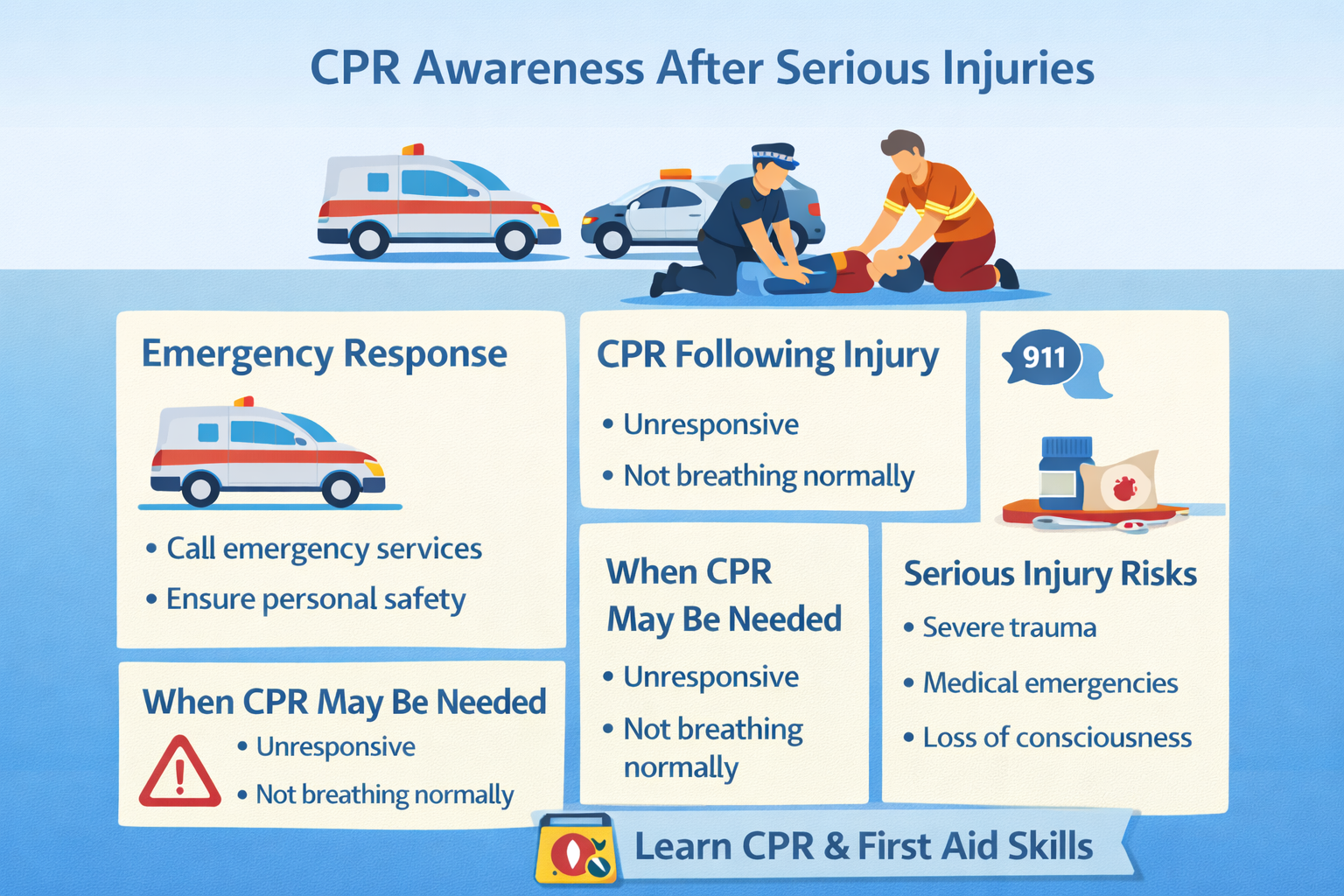
Police officers and paramedics arriving at the scene found a 41-year-old man unresponsive in a room. Emergency responders began CPR and were able to briefly restore signs of life before transporting him to hospital for further care.
The individual remained in critical condition and was transported to Victoria General Hospital, where he later died several days after the incident. Police later confirmed the investigation had been upgraded from aggravated assault to homicide following the man’s death.
While the investigation continued through law enforcement channels, the event also highlighted the role that emergency responders play in attempting life-saving measures such as CPR when someone is found unresponsive after a serious injury.
Signs Someone May Need Immediate Medical Assistance
When a person has experienced a severe injury or medical emergency, urgent assistance may be needed if they show signs such as:
-
Unresponsiveness or inability to wake
-
Not breathing normally or only gasping
-
Severe visible injuries
-
Pale, grey, or bluish skin tone
-
Lack of response when spoken to or touched
Recognizing these signs and contacting emergency services immediately is an important part of the emergency response process.
Why CPR May Be Attempted After Severe Injuries
Serious injuries can sometimes lead to loss of consciousness or disrupted breathing. When this occurs, trained responders may attempt CPR while waiting for additional medical support.
Situations where CPR may be attempted include:
-
Severe trauma or injuries
-
Medical emergencies affecting breathing or circulation
-
Loss of consciousness following an incident
-
Situations where normal breathing cannot be detected
Emergency responders are trained to assess the situation and begin appropriate life-saving measures as quickly as possible.
Emergency Response and First Aid Awareness
In many emergencies, the first few minutes are critical. Police officers, firefighters, paramedics, and trained bystanders may provide immediate assistance while additional help is on the way.
First aid education programs in Vancouver and across British Columbia often emphasize key priorities during emergencies:
-
Ensure personal safety before assisting
-
Call emergency services immediately
-
Provide assistance within your level of training
-
Follow guidance from emergency dispatchers when available
These steps help ensure that emergency responders can take over care as quickly and safely as possible.
Prevention and Community Safety Considerations
While not all incidents can be prevented, community awareness and safety planning can help reduce risks.
Examples include:
-
Promoting workplace safety training and first aid education
-
Supporting community awareness programs
-
Encouraging bystander readiness during emergencies
-
Ensuring workplaces have clear emergency response procedures
Workplaces across Vancouver and British Columbia often include CPR and first aid training as part of occupational health and safety programs to help employees respond appropriately to emergencies.
Frequently Asked Questions
Why might CPR be used after a serious injury?
CPR may be attempted when a person becomes unresponsive and is not breathing normally. It helps circulate oxygenated blood while emergency medical services are on the way.
Who typically performs CPR during emergencies?
CPR may be performed by trained responders such as police, firefighters, paramedics, or by trained members of the public who are present at the scene.
Does CPR always restore consciousness?
CPR does not guarantee recovery, but it can help maintain circulation until advanced medical care becomes available.
Why is CPR training encouraged in workplaces?
Workplaces may experience medical emergencies or injuries. CPR training helps employees recognize emergencies and respond safely until professional responders arrive.
What should someone do if they find an unresponsive person?
The most important step is to contact emergency services immediately and follow instructions provided by dispatchers while waiting for responders.
Educational Note
This article is intended for general public education about first aid awareness and emergency response. Learning CPR and basic first aid can help individuals recognize emergencies and provide assistance safely until trained medical responders arrive.
About The Author

Mark Kascha
First Aid Instructor Trainer with 30+ years of experience in CPR, emergency response, and safety training across Canada.
Last reviewed: March 2026
 Support local, Canadian-owned businesses, with no connections to American corporations or partnerships.