loading...
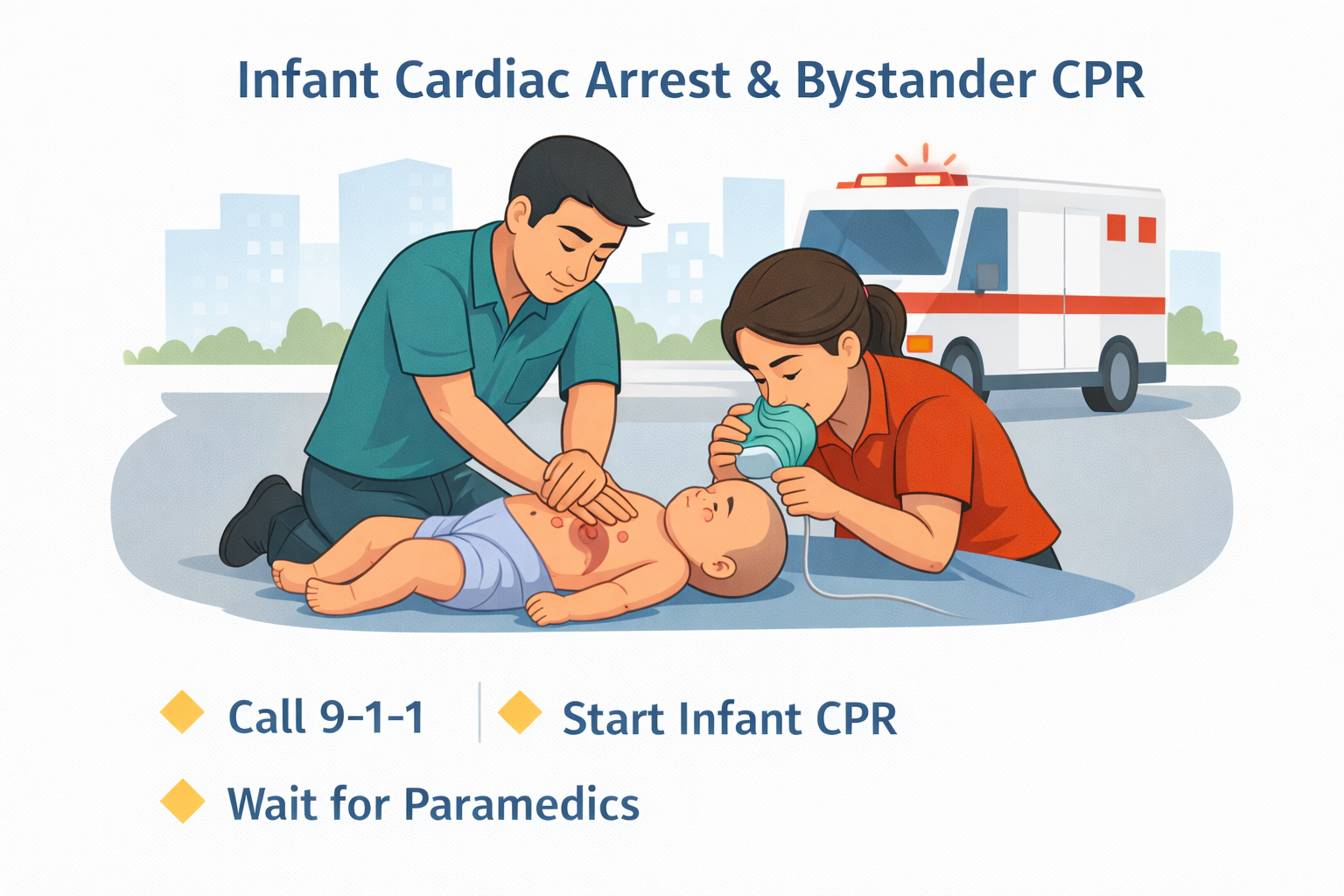
Understanding Infant Cardiac Arrest and Breathing Emergencies Cardiac arrest in infants occurs when the heart stops effectively pumping blood, often following a serious breathing emergency. In babies, cardiac arrest is frequently related to problems with breathing rather than primary heart disease. When breathing stops, oxygen levels fall quickly, which can lead to loss of consciousness […]
Infant Cardiac Arrest and Bystander CPR: How Quick Action Helped Save a Baby’s Life Read More »
Why First Aid Training Matters in Unexpected Emergencies First aid and CPR training provide people with the knowledge and confidence to assist others during medical emergencies. Whether an incident involves injuries, cardiac arrest, or sudden illness, the actions taken in the first few minutes can play an important role in stabilizing a person until professional
Public Interest in First Aid Training After Major Emergencies in Canada Read More »
Understanding Cardiac Arrest During Travel Cardiac arrest occurs when the heart suddenly stops pumping blood effectively. When this happens, oxygen can no longer circulate to the brain and other vital organs. Immediate action—such as cardiopulmonary resuscitation (CPR) and the use of an automated external defibrillator (AED)—can help maintain circulation until professional medical care becomes available.
In-Flight Medical Emergency Highlights the Importance of CPR and AED Awareness Read More »
Understanding Sudden Cardiac Arrest Sudden cardiac arrest occurs when the heart unexpectedly stops beating effectively, preventing blood from circulating to the brain and other vital organs. Without immediate assistance, oxygen levels fall quickly and the person may collapse and lose consciousness. Rapid response—particularly cardiopulmonary resuscitation (CPR)—can help maintain circulation until emergency medical responders arrive. Across
Bystanders Save Man’s Life with CPR at Community Auction Read More »
Understanding Sudden Cardiac Arrest in Young Athletes Sudden cardiac arrest occurs when the heart unexpectedly stops pumping blood effectively. Without circulation, oxygen cannot reach the brain and vital organs. Immediate response—particularly cardiopulmonary resuscitation (CPR) and the use of an automated external defibrillator (AED)—can help restore heart rhythm and improve survival chances. Across Canada, including British
Teen Hockey Player Revived by AED During Arena Emergency Read More »
Understanding Cardiac Arrest and Defibrillation Sudden cardiac arrest occurs when the heart unexpectedly stops beating effectively. When this happens, blood circulation to the brain and vital organs stops, and the person may collapse and lose consciousness. Immediate action—especially cardiopulmonary resuscitation (CPR) and the use of an automated external defibrillator (AED)—can help restore heart rhythm and
Hockey Player Revived with AED at Arena: Why Quick Defibrillation Matters Read More »
Understanding Sudden Cardiac Arrest and Defibrillation Sudden cardiac arrest occurs when the heart unexpectedly stops pumping blood effectively. When this happens, oxygen cannot circulate to the brain and other vital organs. Immediate response—particularly cardiopulmonary resuscitation (CPR) and the use of an automated external defibrillator (AED)—can help restore heart rhythm and support survival until emergency medical
AED at Dental Clinic Helps Save Woman During Cardiac Emergency Read More »
Understanding CPR During Major Emergencies Cardiopulmonary resuscitation (CPR) is an emergency technique used when a person’s heart stops beating or they stop breathing normally. The goal of CPR is to help maintain blood circulation and oxygen flow to vital organs until professional medical responders can provide advanced care. Across Canada, including British Columbia and the
Bystanders Provide CPR After Float Plane Crash in Yellowknife Read More »
Serving the Vancouver Lower Mainland with the lowest priced, highest quality safety, CPR, food safe and first aid training since 2010.




 Support local, Canadian-owned businesses, with no connections to American corporations or partnerships.