loading...
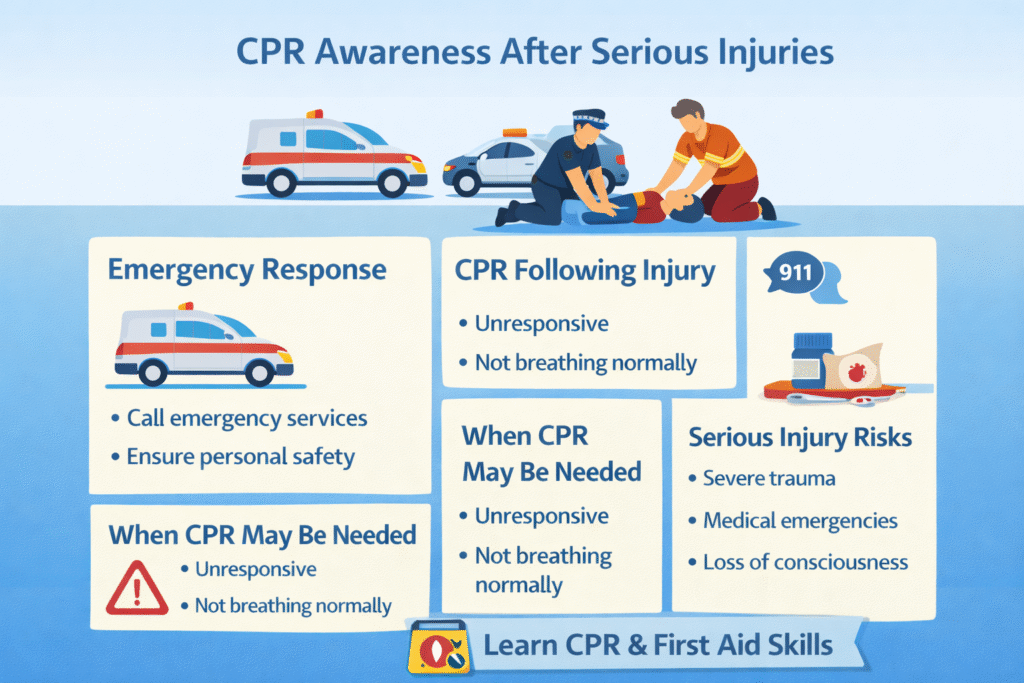
Cardiopulmonary resuscitation (CPR) is an emergency response technique used when a person becomes unresponsive and is not breathing normally. It helps maintain circulation and oxygen flow to vital organs while emergency medical care is on the way. Across British Columbia, including Vancouver and Victoria, CPR training is commonly included in workplace safety programs and community […]
CPR Awareness During Serious Injuries and Emergencies in British Columbia Read More »
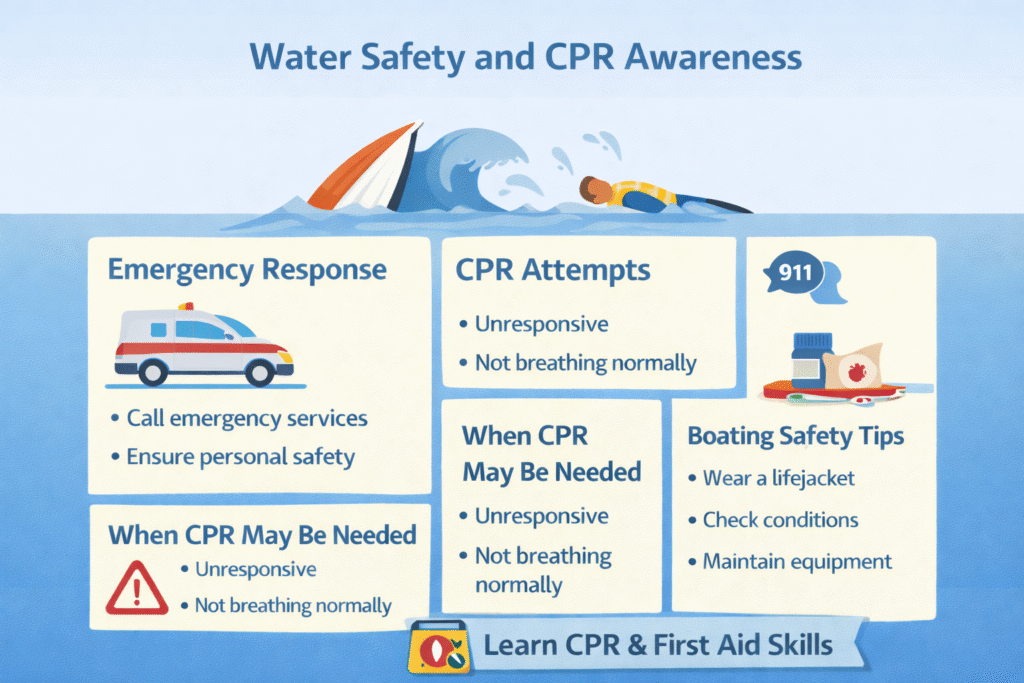
Boating and fishing are common activities across Canada’s coastal communities and inland waterways. However, sudden weather changes, mechanical problems, or rough water can quickly create dangerous situations. When someone falls overboard and becomes unresponsive, emergency responders or bystanders may attempt cardiopulmonary resuscitation (CPR) while waiting for professional medical help. Although this incident occurred in another
Water Safety and CPR Awareness During Boating Emergencies Read More »
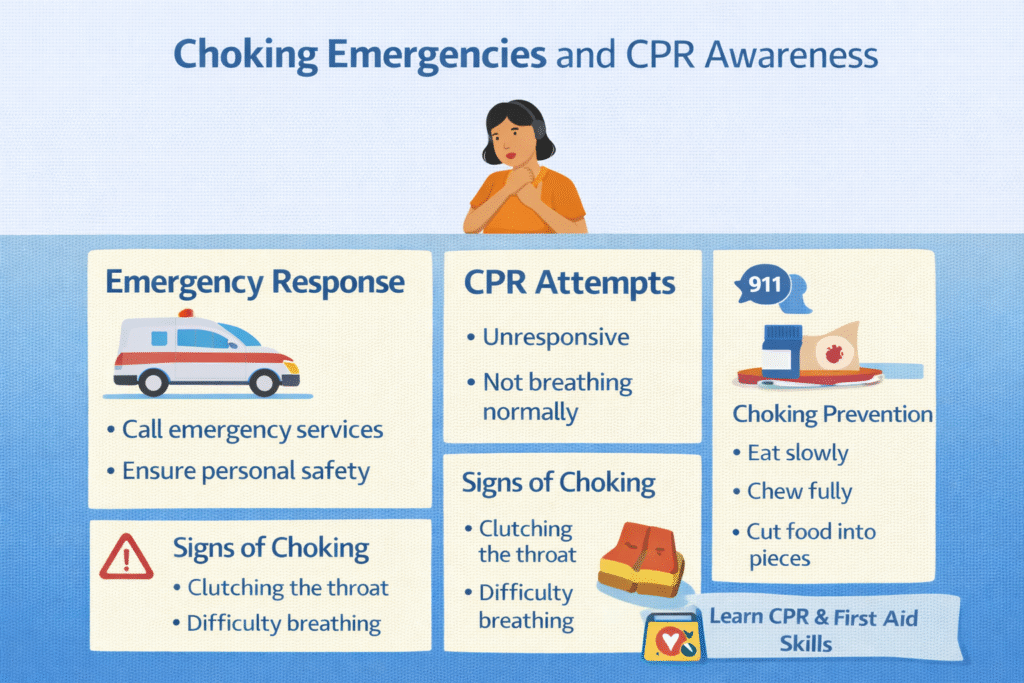
Choking occurs when food or another object blocks the airway and prevents normal breathing. In severe cases, the blockage can stop oxygen from reaching the lungs and brain, creating a life-threatening emergency. Across Canada, including workplaces and public facilities in Vancouver and British Columbia, first aid and CPR training often includes education about choking recognition
Choking Emergencies and CPR Awareness in Canada Read More »
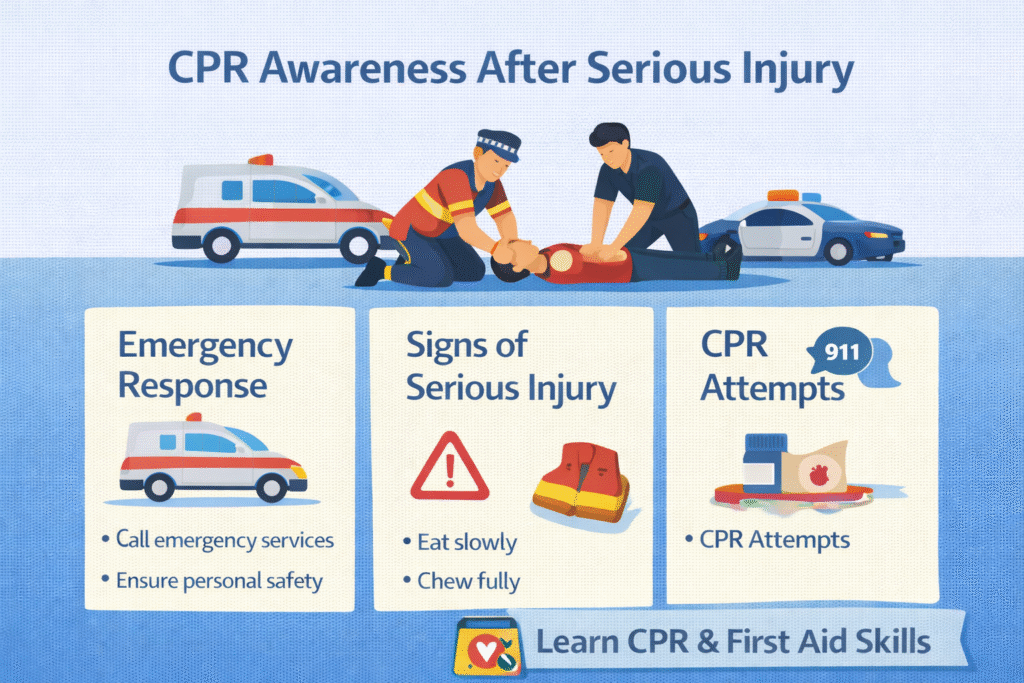
Cardiopulmonary resuscitation (CPR) is an emergency response technique used when a person becomes unresponsive and is not breathing normally. It helps circulate oxygenated blood to vital organs until advanced medical care can take over. Across Vancouver, Langley, and other communities in British Columbia, CPR training is commonly included in workplace safety programs and community first
CPR Awareness During Critical Injury Emergencies in British Columbia Read More »
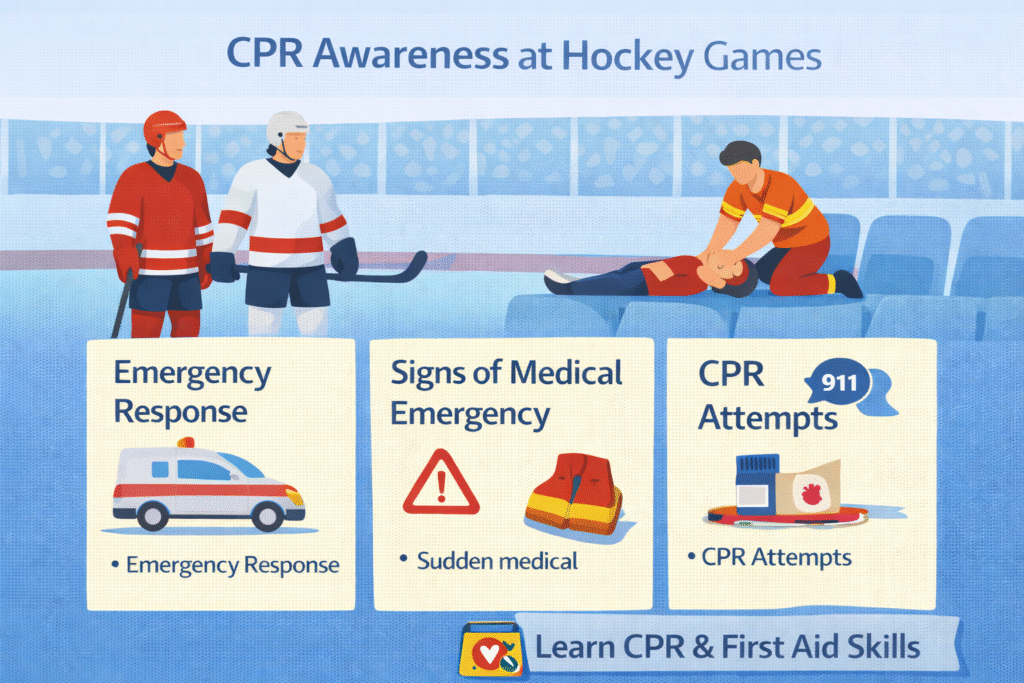
Large public events such as hockey games bring together thousands of spectators in arenas and stadiums. While these gatherings are typically safe, medical emergencies can occur unexpectedly among fans, athletes, or staff. When someone becomes unresponsive and is not breathing normally, trained personnel may attempt cardiopulmonary resuscitation (CPR) until advanced medical care arrives. Across Canada,
CPR Awareness at Public Sporting Events Read More »
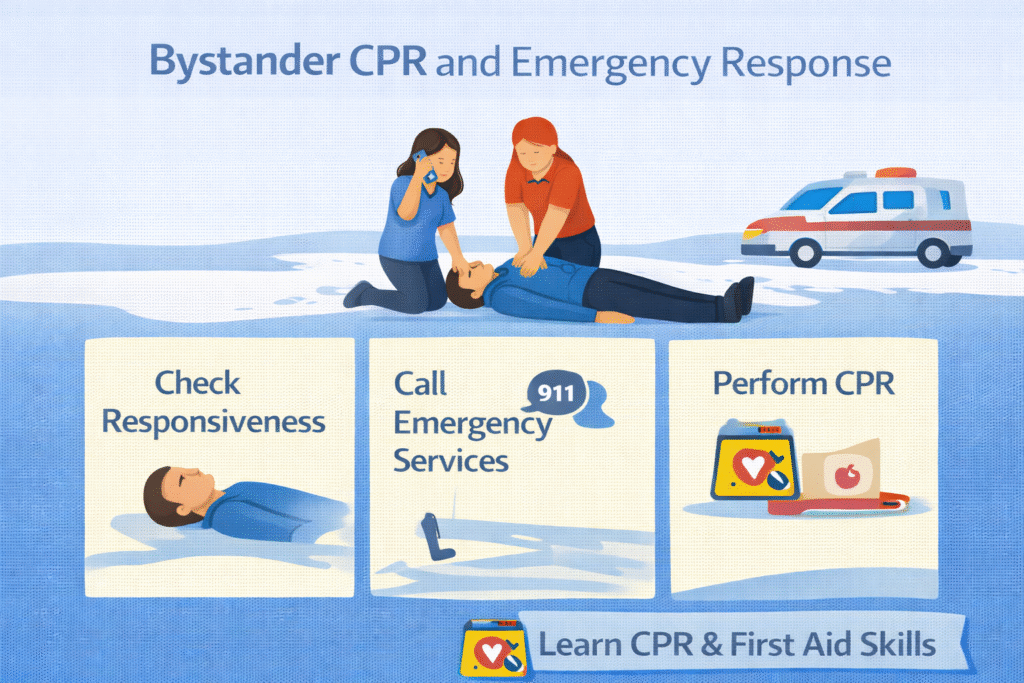
Cardiac emergencies can occur suddenly and without warning. When a person collapses and is not breathing normally, cardiopulmonary resuscitation (CPR) may help maintain circulation until paramedics arrive. Across Canada, including Vancouver and British Columbia, CPR awareness and first aid training are widely encouraged in workplaces, schools, and communities to prepare people for these unexpected situations.
Bystander CPR: How Quick Action Can Help During Cardiac Emergencies Read More »
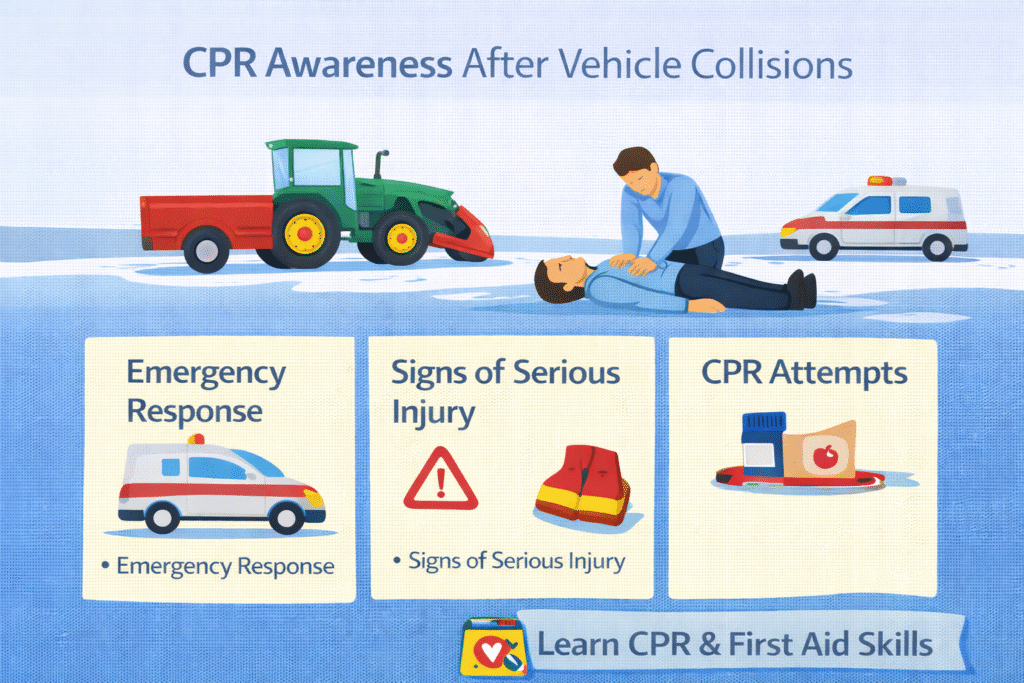
Motor vehicle collisions can sometimes result in serious injuries that require immediate emergency response. When someone becomes unresponsive and is not breathing normally, bystanders or first responders may attempt cardiopulmonary resuscitation (CPR) while waiting for paramedics to arrive. Across Canada, including Vancouver and British Columbia, CPR and first aid training are often included in workplace
CPR Awareness After Rural Road Collisions Read More »
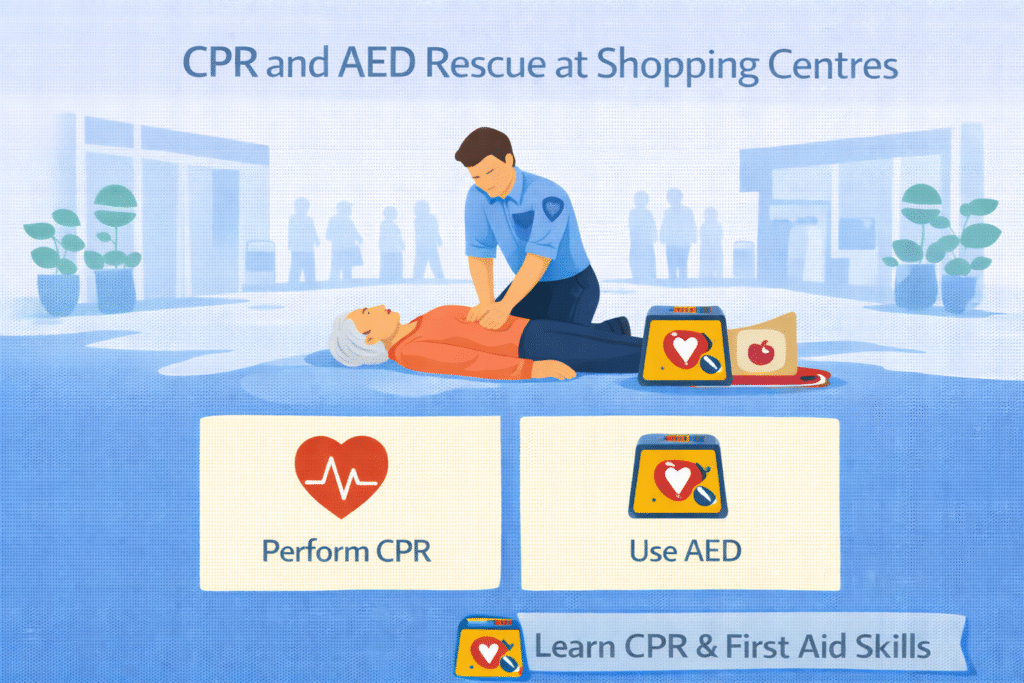
Sudden cardiac arrest can occur anywhere, including public places such as shopping centres, workplaces, and recreation facilities. When a person collapses and stops breathing normally, cardiopulmonary resuscitation (CPR) and the use of an automated external defibrillator (AED) may help maintain circulation until emergency medical services arrive. Across Vancouver, Surrey, and throughout British Columbia, many workplaces
CPR and AED Awareness in Public Places: A Mall Rescue Example Read More »
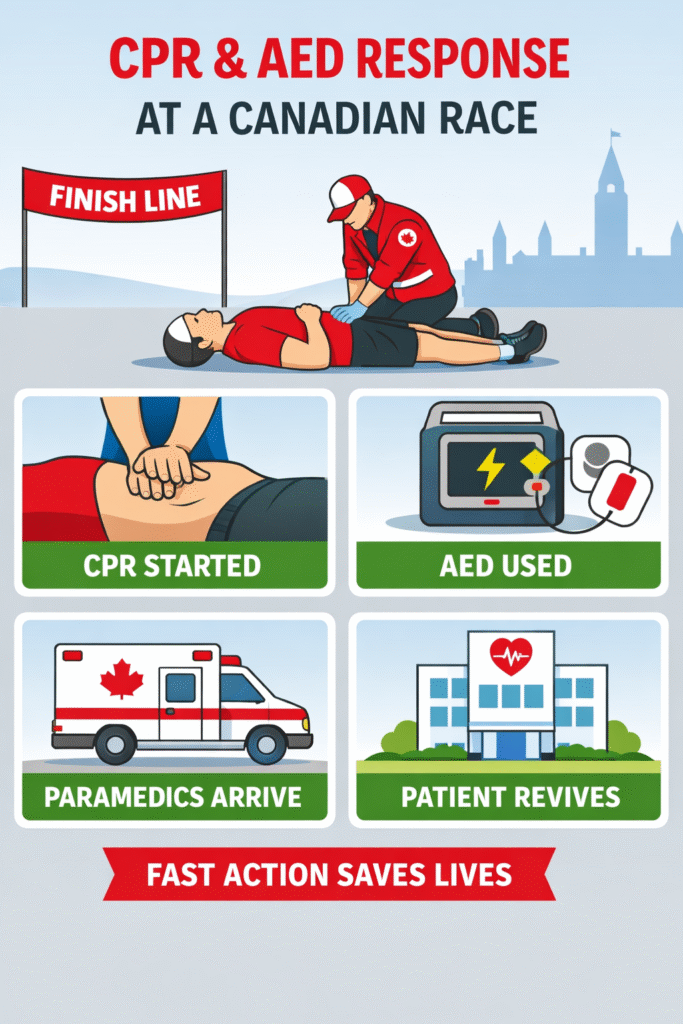
Sudden cardiac arrest can occur when the heart unexpectedly stops beating effectively, preventing blood from circulating to the brain and other vital organs. Without immediate assistance, loss of consciousness can occur within seconds. Events like running races, community fitness activities, and workplace wellness programs are common across Canada, including in Vancouver and throughout British Columbia.
Rapid CPR and AED Use Saves Runner at Canadian Race Finish Line Read More »
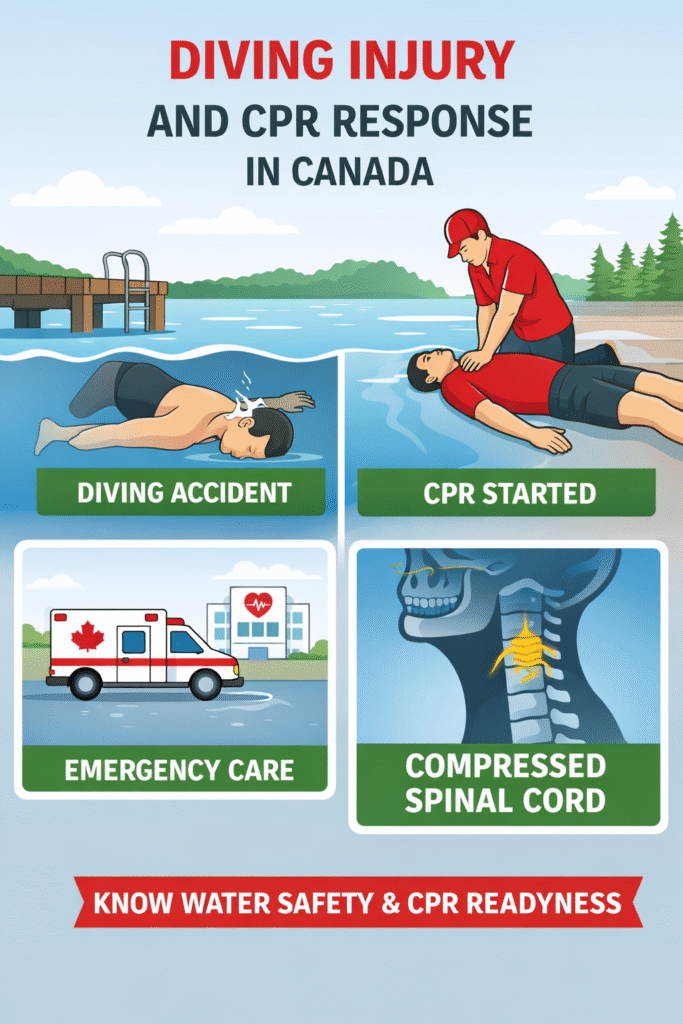
Diving into shallow or unfamiliar water can sometimes lead to serious head and neck injuries. When a diver strikes the bottom of a lake, river, or pool, the force of impact may place extreme pressure on the cervical spine—the bones in the neck that protect the spinal cord. Across Canada, including recreational areas around Vancouver
Diving Injury and CPR Response: A Canadian Lake Accident Case Read More »
Serving the Vancouver Lower Mainland with the lowest priced, highest quality safety, CPR, food safe and first aid training since 2010.

 Support local, Canadian-owned businesses, with no connections to American corporations or partnerships.