First Aid for Falls at Work: Head Injury and CPR Awareness

Falls from heights remain one of the most serious hazards in construction and industrial work environments. A fall can result in head injuries, internal bleeding, or loss of consciousness, all of which may require immediate first aid and emergency response. Across Vancouver, Burnaby, Surrey, and the Lower Mainland of British Columbia, workplace safety programs emphasize […]

First Aid for Falls at Work: Head Injury and CPR Awareness Read More »
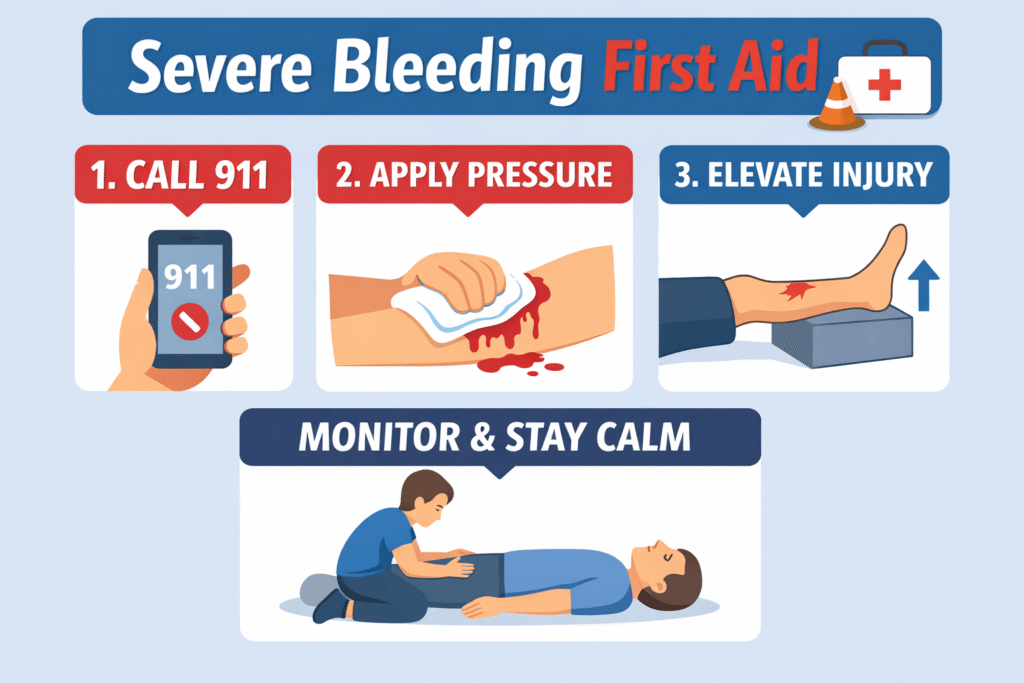
Severe bleeding first aid guide

Recognizing and Responding to Severe Bleeding Injuries: Workplace First Aid Awareness in Canada

Understanding Severe Bleeding and Traumatic Injuries Severe bleeding, also known as major external bleeding, is a life-threatening condition that can occur when blood vessels are damaged due to trauma such as cuts, punctures, or impact injuries. While incidents like shootings are uncommon in most Canadian workplaces, the first aid response principles for severe bleeding are

Recognizing and Responding to Severe Bleeding Injuries: Workplace First Aid Awareness in Canada Read More »

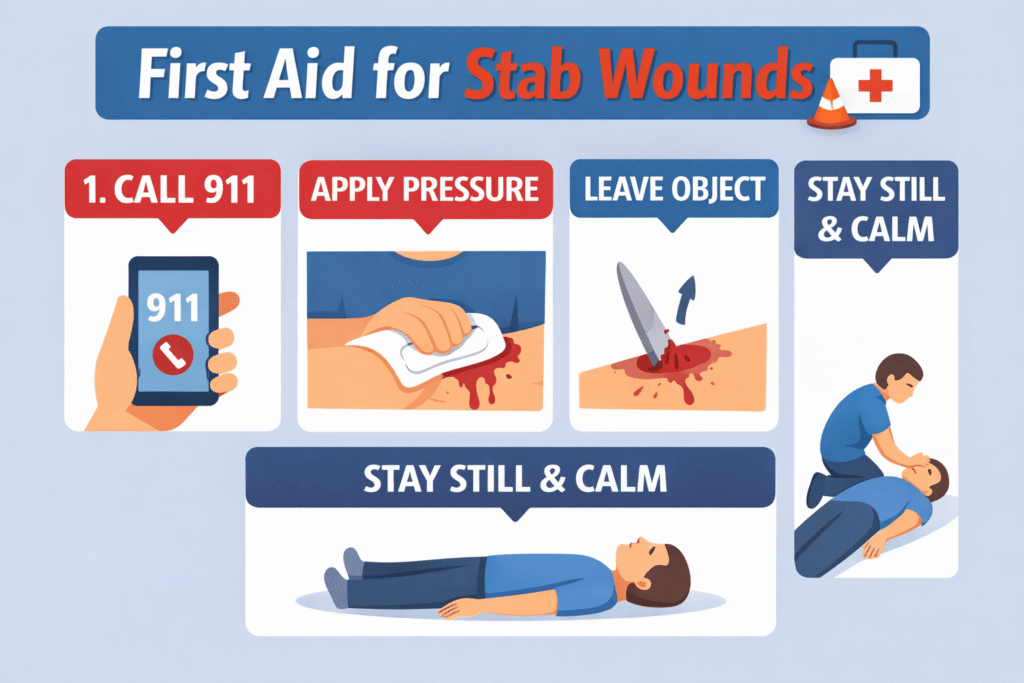
First aid steps for stab wounds

First Aid for Stab Wounds and Severe Bleeding: Workplace Safety in British Columbia

Understanding Stab Wounds and Traumatic Bleeding A stab wound is a type of penetrating injury caused by a sharp object entering the body. These injuries can lead to serious internal or external bleeding, depending on the depth and location of the wound. While incidents involving violence are uncommon, the first aid principles for managing severe

First Aid for Stab Wounds and Severe Bleeding: Workplace Safety in British Columbia Read More »

Water Safety and CPR Awareness for Children: Preventing Drowning Incidents in British Columbia

Understanding Drowning and Water Emergencies Drowning occurs when a person is unable to breathe due to being submerged in water. It can happen quickly and quietly, especially with young children. Even a short lapse in supervision can lead to a serious emergency. Immediate response—particularly early rescue and CPR (cardiopulmonary resuscitation)—plays a critical role in improving

Water Safety and CPR Awareness for Children: Preventing Drowning Incidents in British Columbia Read More »

How AEDs and CPR Save Lives: Cardiac Emergency Response in Canadian Sports Facilities

Understanding Cardiac Arrest and Defibrillators Cardiac arrest happens when the heart suddenly stops beating due to an electrical malfunction. Without immediate help, blood flow to the brain and body stops. Quick action—especially CPR (cardiopulmonary resuscitation) and the use of an automated external defibrillator (AED)—can significantly improve the chances of survival. An AED is a portable

How AEDs and CPR Save Lives: Cardiac Emergency Response in Canadian Sports Facilities Read More »

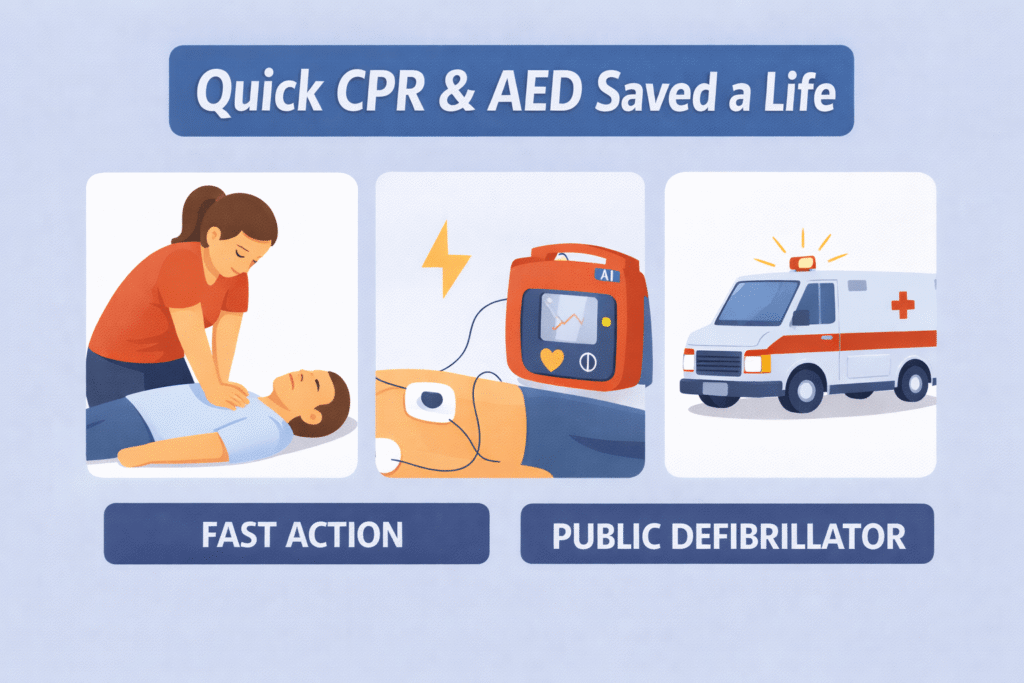
How CPR and AED Use Save Lives: Why Seconds Matter in Cardiac Emergencies

How CPR and AED Use Save Lives: Why Seconds Matter in Cardiac Emergencies Understanding Cardiac Arrest and Emergency Response Cardiac arrest occurs when the heart suddenly stops beating due to an electrical malfunction. Without immediate help, oxygen-rich blood stops reaching the brain and vital organs. Quick action—especially early CPR (cardiopulmonary resuscitation) and use of an

How CPR and AED Use Save Lives: Why Seconds Matter in Cardiac Emergencies Read More »

AED Accessibility in Canadian Cities: Why Placement Matters for Cardiac Emergencies

Understanding AEDs and Cardiac Arrest Response An automated external defibrillator (AED) is a portable device used to help restore a normal heart rhythm during cardiac arrest. Cardiac arrest occurs when the heart suddenly stops beating due to an electrical issue, preventing blood from circulating to the brain and vital organs. AEDs are designed for public

AED Accessibility in Canadian Cities: Why Placement Matters for Cardiac Emergencies Read More »

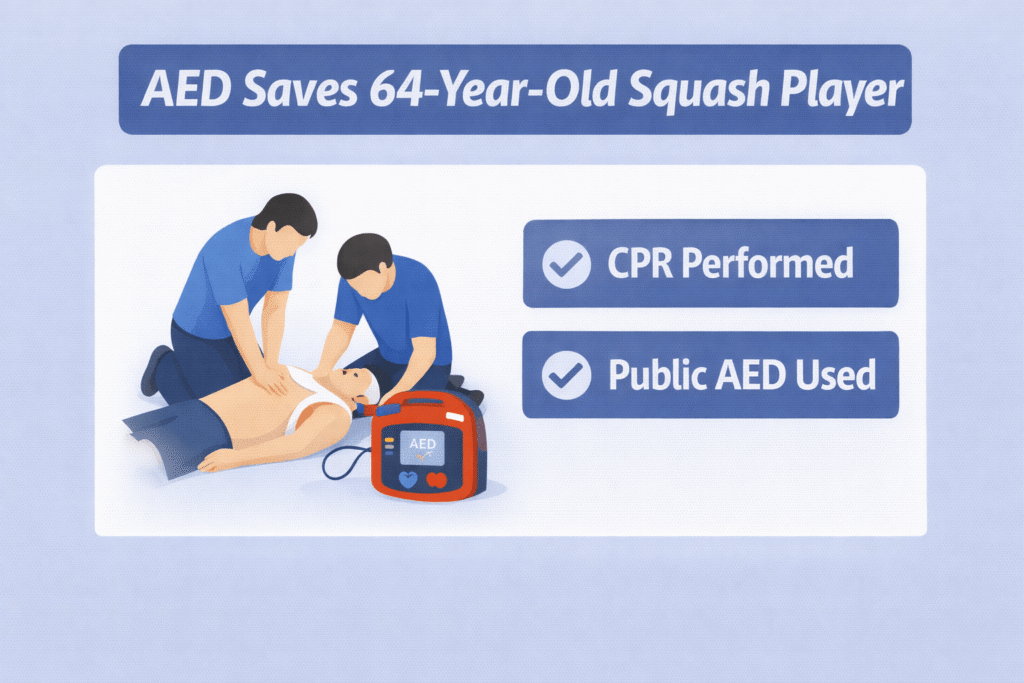
AED used to save squash player

AED and CPR in Sports Facilities: Quick Response to Cardiac Arrest in Canada

Understanding Cardiac Arrest During Physical Activity Cardiac arrest occurs when the heart suddenly stops beating due to an electrical problem. It can happen without warning, including during or after physical activity such as sports. Immediate response—especially CPR (cardiopulmonary resuscitation) and the use of an automated external defibrillator (AED)—is critical in helping restore circulation and improving

AED and CPR in Sports Facilities: Quick Response to Cardiac Arrest in Canada Read More »

CPR in Emergencies: Understanding Response Efforts in Unresponsive Individuals

Understanding CPR and Emergency Situations Cardiopulmonary resuscitation (CPR) is an emergency procedure used when a person is unresponsive and not breathing normally. It helps maintain blood flow to the brain and vital organs until advanced medical care arrives. CPR is a critical part of emergency response in situations such as cardiac arrest, trauma, or other

CPR in Emergencies: Understanding Response Efforts in Unresponsive Individuals Read More »

First Aid for Gunshot Injuries and Severe Bleeding: Workplace Safety Awareness in Canada

Understanding Gunshot Injuries and Bleeding Risks Gunshot wounds are a type of penetrating injury that can cause significant internal and external bleeding. While these incidents are uncommon in most Canadian workplaces, the first aid response principles—especially bleeding control—apply to many serious injuries, including accidents involving tools, machinery, or sharp objects. Severe bleeding is a medical

First Aid for Gunshot Injuries and Severe Bleeding: Workplace Safety Awareness in Canada Read More »

Serving the Vancouver Lower Mainland with the lowest priced, highest quality safety, CPR, food safe and first aid training since 2010.

Shopping Cart
Scroll to Top
Call Now Button
Maple Leaf Support local, Canadian-owned businesses, with no connections to American corporations or partnerships. Maple Leaf
This is default text for notification bar